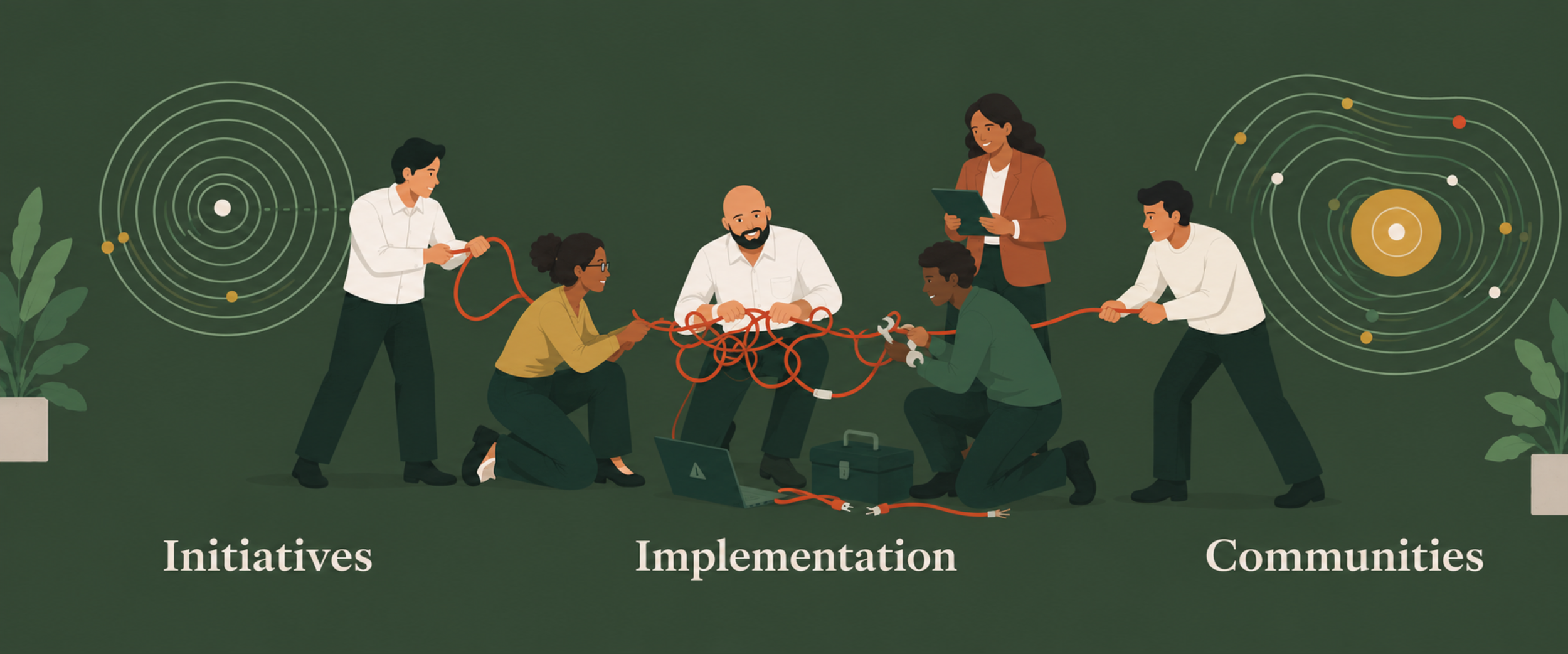
Plans get approved. Delivery is the hard part.
Hello, I'm Nader.
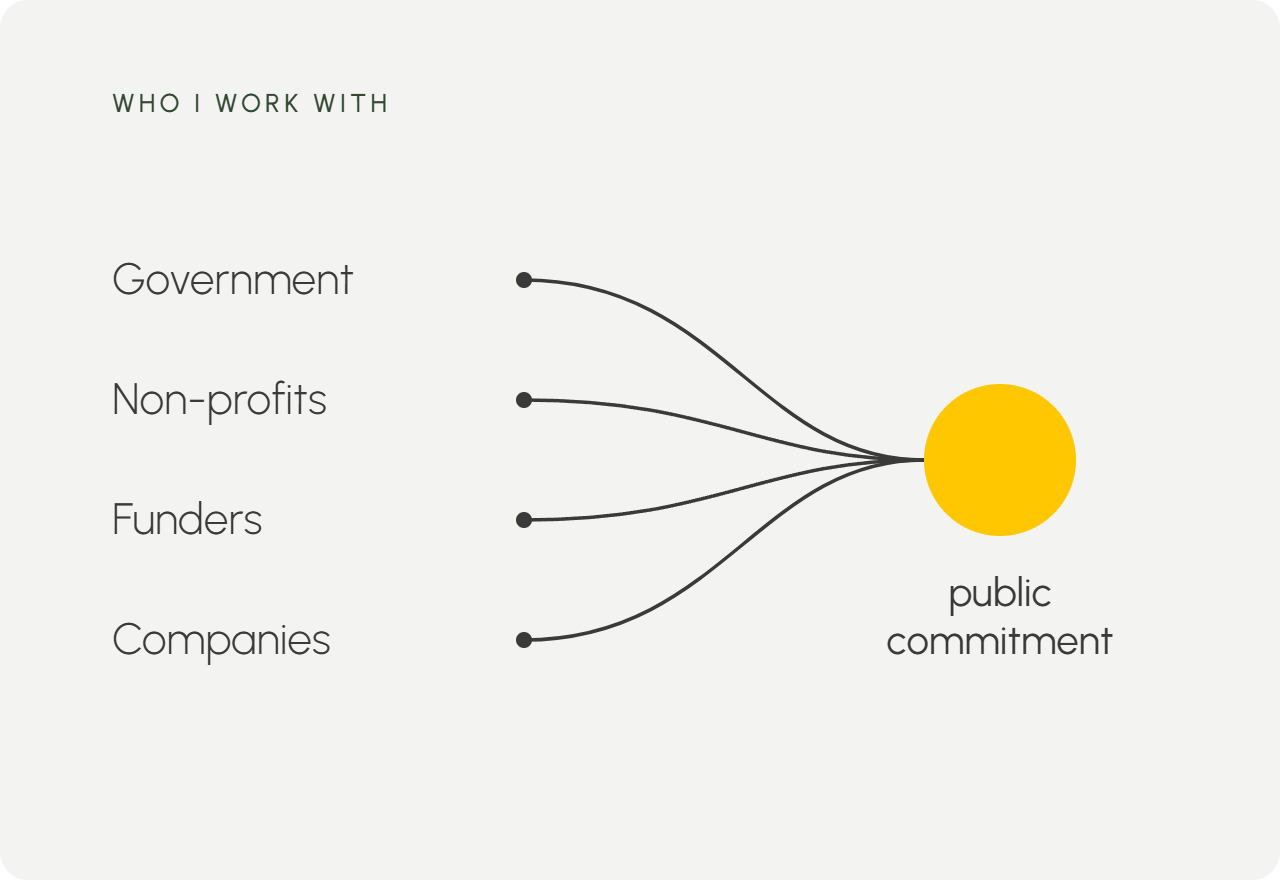
I help public initiatives deliver, for everyone they are meant to serve.
I do this by building with you. I also offer training and coaching, learning and evaluation, and speaking.

 Core offer
Build With You
Hands-on work on your initiative and with your team. We build the roadmap, tracking, and engagement plan together, and your staff learn by doing.
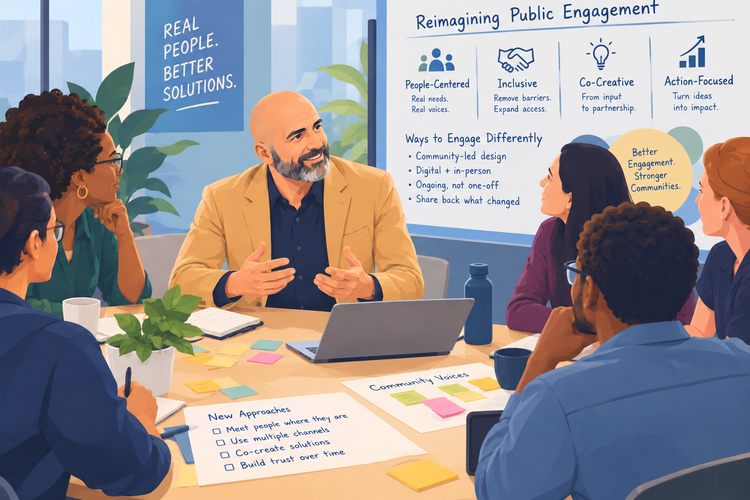
Training and Coaching
Bring a real initiative and the people responsible for it. Leave with a team that can scope it, run it, and show it worked. A team that delivers with less friction, and more alignment.

Learning and Evaluation
Measurement does not have to be complicated or resource intensive. We scope it to the project's needs, see what is working, show it to the people who will ask, and use the lessons next time.

Speaking
Keynotes and conference sessions on delivering public initiatives, using data and AI from engagement through implementation, and measuring what matters. From twenty years in government, nonprofits, industry, and startups.
Why initiatives that everyone agreed on still don't deliver.
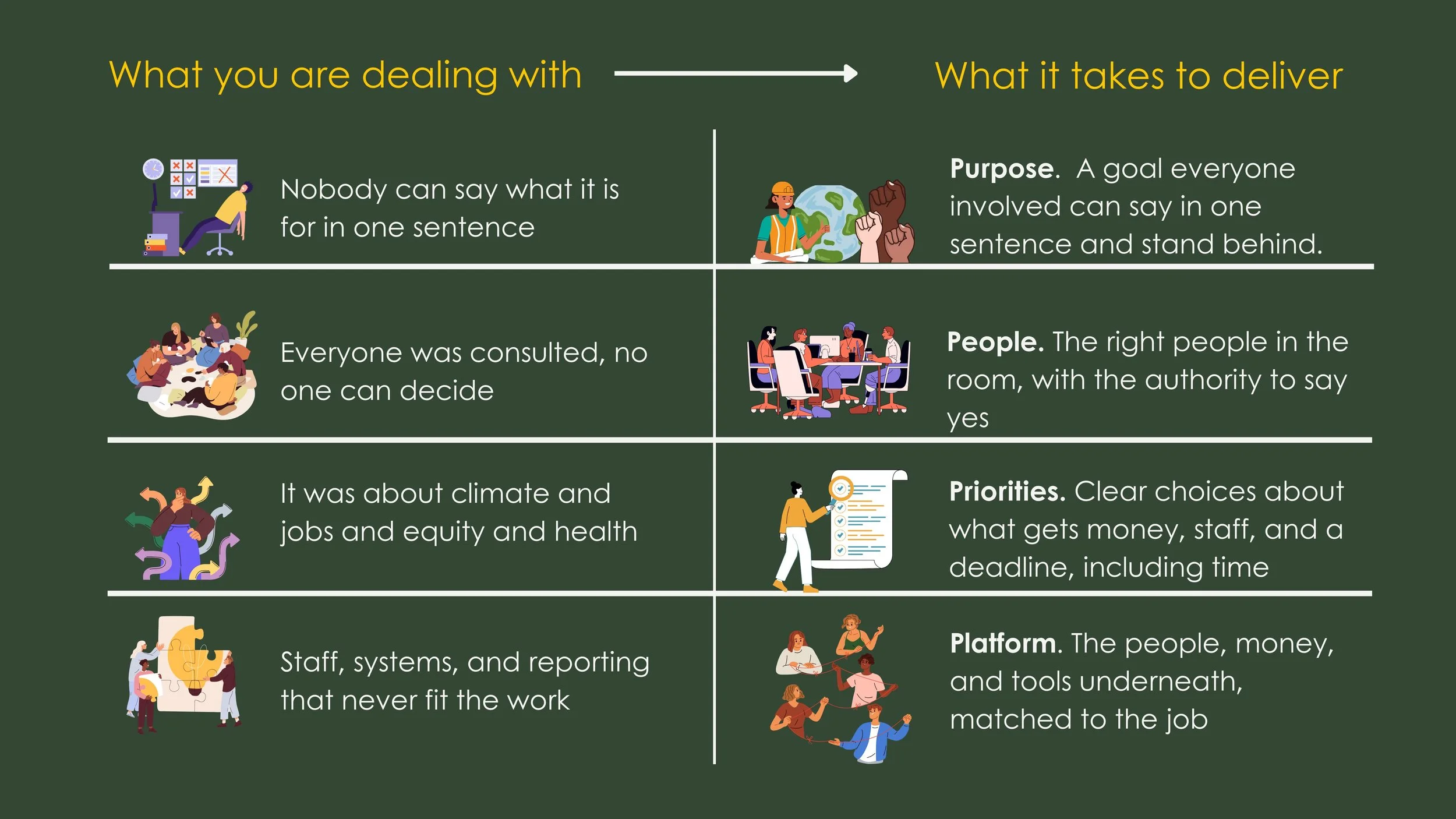
The plan was fine. The money was approved. Then it slowed down somewhere between the announcement and the neighborhood.
After twenty years of running, funding, and evaluating public work, I keep finding the same four things underneath. Each one is a question you can ask today, of any initiative you are responsible for.
Stories
-
![A colorful diagram titled 'Measuring What Matters: A Success Framework for We Prosper Together' with three interconnected circles in red, green, and blue, illustrating strategies to achieve equitable access to high-quality jobs. The diagram is labeled 'The Goal' at the center, with the overarching goal of 'Equitable access to High Quality Jobs.' The bottom section features logos for 'We Prosper Together,' 'California Jobs First,' and 'Valley Vision,' along with the text 'The Triangle April 2025.']()
Program Design & Evaluation: Valley Vision
-
![Cover page of a document titled 'NEOM' with Arabic script beneath it, featuring a colorful abstract geometric design of intertwined shapes, and text about a study on emerging and emergent city technologies.]()
Program Design: The LINE, NEOM - Saudi Arabia
-
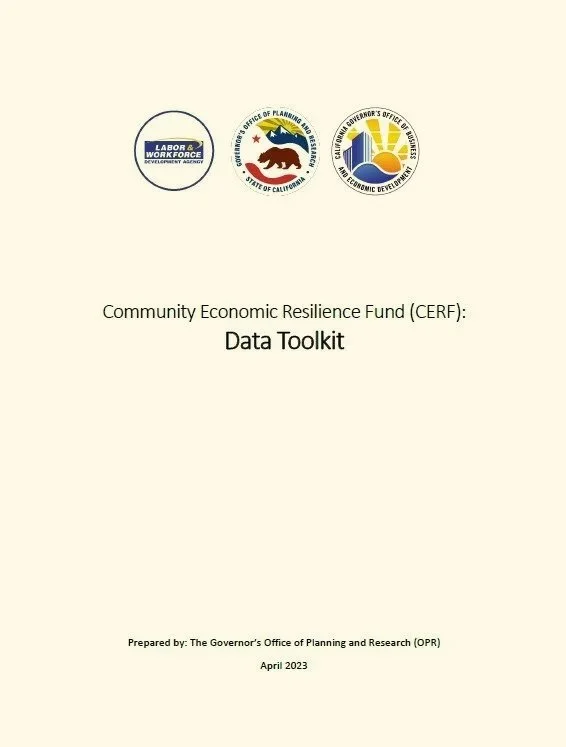
![Cover page of the Community Economic Resilience Fund (CERF) Data Toolkit, featuring logos of the Labor & Workforce Development Agency, California Office of Planning and Research, and California Department of Finance, dated April 2023.]()
Data Toolkit Design: California Jobs First - California Governor's Office
-
![A modern multi-story housing building with white and wood exterior, large windows, and a concrete driveway. Text overlays read: 'Measuring & Communicating Success Connecting affordable housing & mental health,' 'Supportive Housing Community Land Alliance,' 'Outreach by Design,' 'The Triangle,' and '2025.']()
Program Design & Evaluation: Supportive Housing Community Land Alliance, Oakland, California
-
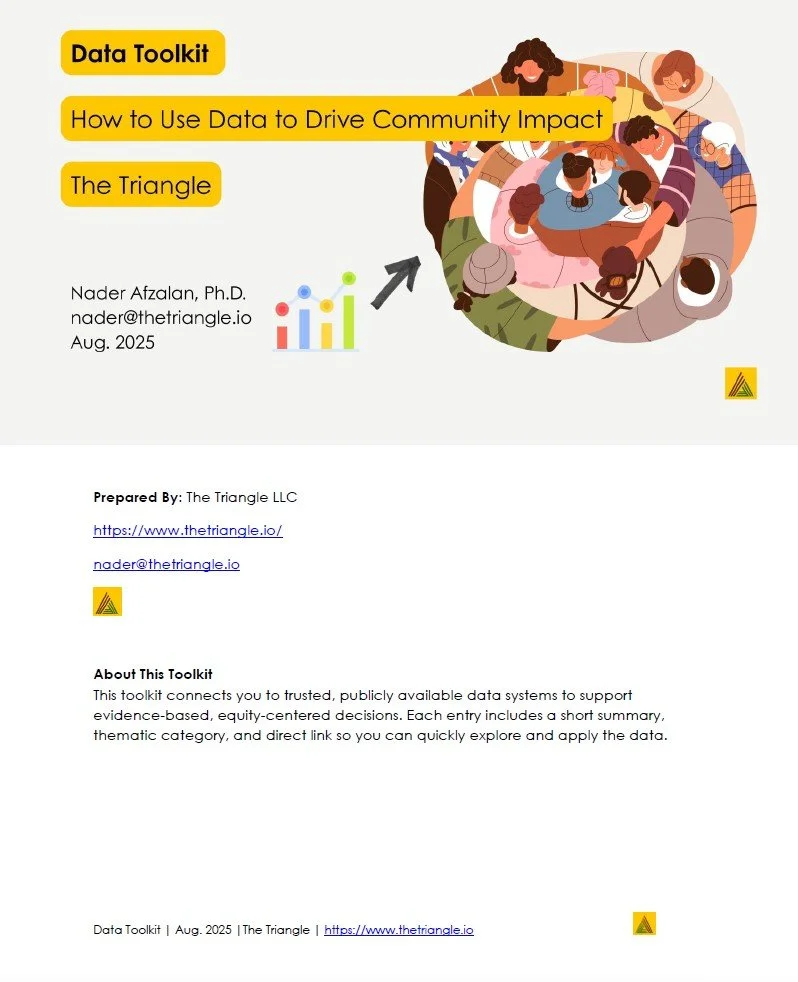
![Cover page of a data toolkit document titled "How to Use Data to Drive Community Impact," featuring an illustration of diverse people gathered around a table, and a graph with an arrow pointing upward.]()
Activate Data: The ACT framework & Data Toolkit



Valley Vision worked with Nader to develop measurable goals and metrics for a multi-county inclusive economic development initiative. Nader brought extensive expertise to our project and was able to walk us through a process that engaged our core stakeholders and resulted in a comprehensive set of measurable and prioritized metrics for our work. This work clarified our purpose and set the stage for deeper work to ensure accountability towards the types of community change we want to create. Nader was personable and accessible for our staff and our stakeholders and we appreciated the experience and results of working with him.
Evan Schmidt, CEO of Valley Vision

It's often easy to think that we just need more data or information to answer resilience questions, but in Nader's half day workshop focused on developing regional climate resilience profiles for community impact, our students gained valuable skills for asking a targeted questions, performing rapid assessments using free online tools, and drawing preliminary conclusions from the exercise. We are excited to work with the Triangle team again!
Sarah Eminhizer, Director, of the Coastal Climate Resilience Program at UC Santa Cruz
Partnered With